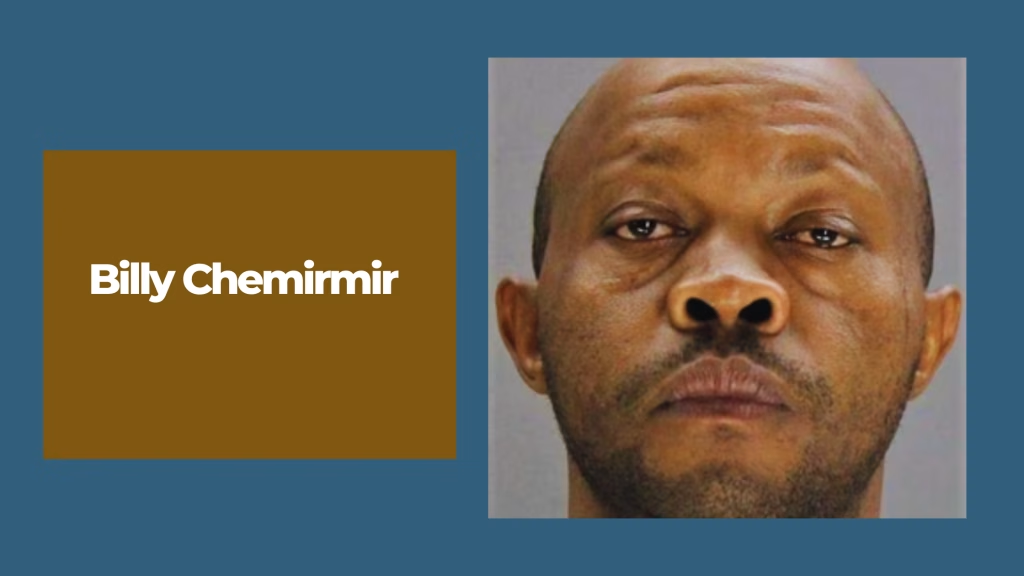
When 81-year-old Mary Bartel opened her apartment door on March 19, 2018, she had no reason to suspect the man standing there wanted to kill her. He looked ordinary enough, claiming he needed to check something in her Dallas apartment. But within seconds, he forced his way inside, grabbed a pillow, and pressed it over her face until everything went black.
Mary survived that attack. But at least 18 other elderly victims across North Texas weren’t so lucky.
The man who terrorized senior living communities for years was Billy Kipkorir Chemirmir, a healthcare worker who used his access to retirement facilities to identify vulnerable targets, murder them in their homes, and steal their valuables. His crimes went undetected for so long that investigators believe the true number of victims could exceed 20, possibly even reaching into the hundreds.
This is the disturbing story of how one man exploited society’s most vulnerable population and nearly got away with it.
Who Was Billy Chemirmir?
Billy Kipkorir Chemirmir was born in Kenya in 1972. He immigrated to the United States and eventually settled in the Dallas-Fort Worth area of Texas, where he worked various jobs in healthcare and maintenance.
On the surface, Chemirmir seemed unremarkable. He worked as a healthcare aide and maintenance worker at several senior living facilities throughout North Texas. This gave him perfect access to elderly residents, many of whom lived alone and kept valuable jewelry and family heirlooms in their apartments.
But something changed in Chemirmir around 2016. Whether it was financial desperation, greed, or something darker, he developed a deadly plan to exploit the elderly people he’d been hired to help.
The Perfect Crime: Why His Murders Went Undetected
Chemirmir’s method was chillingly simple and devastatingly effective. He understood something crucial about how society views elderly death: when someone in their 80s or 90s dies, people rarely question it.
His pattern was consistent across all his attacks:
Step 1: Identify the target. Working in senior facilities gave Chemirmir insider knowledge. He knew which residents lived alone, which had valuable jewelry, and which would be easiest to overpower.
Step 2: Gain entry. He would knock on apartment doors posing as a maintenance worker or healthcare aide, offering to check pipes, fix something, or provide assistance. Most victims, trusting and raised in a generation that didn’t question authority, would let him inside.
Step 3: Attack and smother. Once inside, Chemirmir would overpower his elderly victims and smother them with a pillow until they stopped breathing. For frail seniors, resistance was impossible.
Step 4: Stage the scene. After stealing jewelry, family heirlooms, and other valuables, he would place the victim’s body back on the bed or in a chair, making it appear as though they’d simply died peacefully in their sleep.
Step 5: Pawn the stolen items. Within hours or days, Chemirmir would sell the stolen jewelry at pawn shops across the Dallas area, making quick cash from items that had been treasured family possessions for generations.
The genius of his crime, from a purely criminal perspective, was understanding medical examiner protocols. When elderly people die in assisted living facilities or their homes, full autopsies are rarely performed. If there’s no obvious sign of trauma and the person is advanced in age, death is typically attributed to natural causes like heart failure or simply “old age.”
Smothering with a pillow leaves minimal physical evidence. The victim’s face might be slightly reddened, but that fades quickly. There are no stab wounds, no gunshot residue, no strangulation marks. To medical examiners who weren’t looking for murder, these deaths appeared completely natural.
This allowed Chemirmir to kill again and again without raising suspicion.
The First Known Victims
Investigators later determined that Chemirmir’s killing spree likely began in 2016, though the exact date of his first murder remains uncertain.
His early victims included:
Lu Thi Harris, 81 – Found dead in her home in March 2018. Her family initially believed she’d died of natural causes until police later connected her death to Chemirmir.
Phyllis Payne, 91 – Discovered deceased in her Preston Place retirement community apartment. Like so many others, her death was initially ruled natural.
Leah Corken, 83 – Found dead in her home. Her family suspected something was wrong when they discovered her valuable jewelry missing, but police initially didn’t investigate it as a homicide.
These women had one thing in common: they were elderly, lived in or near upscale retirement communities, and had valuable possessions. They were also trusting, a trait Chemirmir exploited ruthlessly.
Month after month, Chemirmir continued his pattern. He would scope out new retirement communities, identify vulnerable residents, and strike. Sometimes he hit the same facility multiple times before moving on to avoid detection.
A Pattern Emerges at Preston Hollow and The Tradition
Two senior living communities in particular became hunting grounds for Chemirmir: Preston Hollow and The Tradition-Prestonwood in North Dallas.
Between 2016 and 2018, at least eight residents at these facilities died under circumstances that were later deemed suspicious. At the time, however, staff and families had no reason to suspect foul play. These were elderly people in their 80s and 90s. Death, while sad, was expected.
Chemirmir had worked at some of these facilities or had connections to workers there, giving him detailed knowledge of layouts, security measures, and resident routines. He knew when staff would be busy, when residents would be alone, and how to move through buildings without attracting attention.
In several cases, he was even seen on security cameras entering facilities, but because he looked like he belonged there, no one questioned him.
The Survivors Who Saved Lives
Two women survived Billy Chemirmir’s attacks, and their courage ultimately led to his capture.
Read more: Larry Eyler: The Highway Killer Who Terrorized the Midwest
The First Survivor: A 93-Year-Old’s Quick Thinking
In March 2018, Chemirmir knocked on the door of a 93-year-old woman’s apartment at The Tradition-Prestonwood. When she answered, he forced his way inside, knocked her to the ground, and pressed a pillow over her face.
But this woman was smart. Realizing she wasn’t strong enough to fight him off, she stopped struggling and played dead. Chemirmir, believing he’d killed her, grabbed her jewelry box and fled.
The moment he left, she crawled to her emergency alert button and pressed it. When police arrived, she was alive and able to describe her attacker. Unfortunately, her description wasn’t detailed enough to immediately identify a suspect, and Chemirmir slipped away once again.
Mary Bartel: The Survivor Who Led to His Arrest
On March 19, 2018, 81-year-old Mary Bartel answered her door to find Billy Chemirmir standing there. He claimed to be checking something in the building. Before Mary could process what was happening, he shoved his way inside and yelled at her to lie down.
Terrified, Mary complied. Chemirmir grabbed a pillow and pressed it over her face, cutting off her air supply. Mary lost consciousness, and Chemirmir assumed she was dead. He snatched her jewelry box and left.
Hours later, a friend stopped by Mary’s apartment for a planned visit. When she got no answer at the door, she let herself in with a spare key. There on the floor lay Mary, unconscious but still breathing.
Paramedics rushed Mary to the hospital, where she was revived. Unlike previous victims, Mary survived to tell her story. She gave police a detailed description of her attacker, including details about his appearance and the car he was driving.
That description would prove crucial.
The Final Victim: Lu Thi Harris
The day after attacking Mary Bartel, Billy Chemirmir wasn’t done. On March 20, 2018, he was already hunting for his next victim.
He encountered 81-year-old Lu Thi Harris at a Walmart in Dallas. Exactly how they interacted remains unclear, but investigators believe Chemirmir followed her home that day.
Later that same day, Chemirmir entered Lu’s apartment and smothered her to death. He stole her jewelry box, as he’d done with all his other victims, and left her body positioned to look like she’d died naturally.
Lu Thi Harris became Billy Chemirmir’s final murder victim.
But he had no idea police were already closing in.
The Arrest: Caught Throwing Away Evidence
By March 20, 2018, Dallas police had connected Mary Bartel’s attack to several suspicious deaths at area retirement communities. Mary’s description of her attacker matched a man whose vehicle had been spotted near previous crime scenes.
That man was Billy Chemirmir.
Police began surveilling Chemirmir’s apartment, waiting for him to make a mistake. They didn’t have to wait long.
That same evening, after murdering Lu Thi Harris, Chemirmir returned home. Surveillance officers watched as he walked to the dumpster behind his apartment complex and threw something away.
The moment Chemirmir turned his back, officers moved in and arrested him. They immediately searched the dumpster and found what he’d discarded: a jewelry box with Lu Thi Harris’s name on a piece of paper inside.
Police rushed to Lu’s apartment about 10 miles away. Inside, they found her body. She had been murdered just hours earlier.
When police searched Chemirmir’s vehicle and apartment, they found more stolen jewelry and documents linking him to numerous elderly victims across North Texas. The evidence was overwhelming.
The Investigation: Connecting Hundreds of Deaths
Once Billy Chemirmir was in custody, Dallas police faced a monumental task: figuring out exactly how many people he’d killed.
Investigators began reviewing hundreds of deaths of elderly people across the Dallas-Fort Worth area dating back to 2016. They looked for common factors:
- Elderly victims who died alone at home or in senior facilities
- Deaths initially ruled as natural causes
- Missing jewelry or valuables reported by families
- Proximity to locations where Chemirmir worked or was known to frequent
- Dates that aligned with Chemirmir’s known whereabouts
The investigation was complicated by the fact that so many deaths had been ruled natural and victims had already been buried or cremated. Without bodies to examine, proving murder was nearly impossible in many cases.
Families who had accepted their loved ones’ deaths as natural suddenly faced a horrifying possibility: their mother, grandmother, or aunt hadn’t died peacefully in their sleep. They’d been murdered for their jewelry.
Some families requested exhumations. In cases where that was possible, and bodies were examined, medical examiners found evidence consistent with smothering in several instances.
The Victims We Know About
Billy Chemirmir was ultimately charged with the murders of 18 elderly victims, though investigators believe the true number is higher. Here are the confirmed victims:
Lu Thi Harris, 81 – Murdered March 20, 2018
Mary Brooks, 87 – Murdered January 2018
Glenna Day, 87 – Murdered October 2016
Phyllis Payne, 91 – Murdered May 2017
Phoebe Perry, 94 – Murdered June 2017
Leah Corken, 83 – Murdered September 2016
Doris Gleason, 92 – Murdered February 2017
Rosemary Curtis, 75 – Murdered March 2018
Joyce Abramowitz, 82 – Murdered July 2016
Margaret White, 86 – Murdered August 2016
Minnie Campbell, 84 – Murdered April 2017
Ann Conklin, 82 – Murdered June 2017
Juanita Pursley, 83 – Murdered September 2017
Doris Wasserman, 90 – Murdered October 2017
Mamie Dell Miya, 93 – Murdered January 2018
Norma French, 85 – Murdered January 2018
Solomon Spring, 90 – Murdered November 2017 (only male victim)
Martha Williams, 80 – Murdered March 2018
Each name represents a life stolen, a family devastated, and justice delayed.
Why It Took So Long to Catch Him
The Billy Chemirmir case exposes serious failures in how we investigate elderly deaths and protect senior citizens.
Lack of autopsies: Medical examiners rarely perform full autopsies on elderly people who die in their homes or assisted living facilities. When someone in their 90s dies, it’s assumed to be from natural causes unless there’s obvious evidence of trauma.
No pattern recognition: Because deaths were spread across multiple jurisdictions and facilities, no one connected the dots. Each death was treated as an isolated incident.
Minimal security: Many retirement communities have lax security, making it easy for strangers to enter buildings. Chemirmir often posed as a maintenance worker or healthcare aide, and staff rarely questioned him.
Trusting victims: The elderly people Chemirmir targeted grew up in a different era. They were taught to trust authority figures and be polite to service workers. This made them easy targets.
Delayed family suspicions: Even when families noticed missing jewelry, they often assumed it had been misplaced or that their loved one had given it away. Few jumped immediately to murder.
All these factors combined to create the perfect storm that allowed Chemirmir to kill for at least two years before anyone realized a serial killer was targeting North Texas seniors.
The Trials: Justice for the Victims
Billy Chemirmir’s path to justice was long and complicated. He faced two separate murder trials due to the number of victims.
First Trial: April 2022
Chemirmir’s first trial began in April 2022 in Collin County, Texas. He was charged with the capital murder of Lu Thi Harris.
The prosecution presented overwhelming evidence: Chemirmir’s DNA on Lu’s jewelry box, surveillance footage placing him at the scene, testimony from Mary Bartel about her near-death experience, and records showing Chemirmir pawning stolen jewelry.
But shockingly, the trial ended in a mistrial when the jury deadlocked 11-1, unable to reach a unanimous verdict. One juror refused to vote guilty, despite the mountain of evidence.
Families were devastated. How could this happen?
Second Trial: November 2022
Prosecutors immediately retried Chemirmir. This time, they were prepared for any defense arguments.
On November 22, 2022, after deliberating for approximately seven hours, the jury returned a verdict: Guilty of capital murder.
Billy Chemirmir showed no emotion as the verdict was read. He was sentenced to life in prison without the possibility of parole.
Additional Convictions
In a separate trial, Chemirmir was also convicted of the murder of Mary Brooks, 87, and received another life sentence.
While he was only convicted of two murders before his death, he had been indicted on 18 counts of capital murder, with prosecutors preparing to try each case individually if necessary.
Prison Justice: Chemirmir’s Death
On September 19, 2023, Billy Chemirmir was found dead in his cell at the Coffield Unit prison in East Texas. He was 50 years old.
According to prison officials, Chemirmir’s cellmate, 67-year-old Wyatt Ellis, attacked and killed him. Ellis was already serving a life sentence for murder.
The irony wasn’t lost on the families of Chemirmir’s victims. The man who had smothered defenseless elderly people to death had himself been killed violently in prison.
While some families expressed relief that Chemirmir was dead and could never hurt anyone again, others felt cheated. They had wanted him to face trial for all 18 murders, to hear victim impact statements, to have their day in court.
His death closed that chapter permanently.
The Aftermath: Changes and Unanswered Questions
The Billy Chemirmir case sparked important conversations about elder safety and death investigations in Texas and across the country.
Policy changes: Some Texas legislators proposed laws requiring more thorough death investigations for seniors, especially when valuable items are missing.
Facility security: Many senior living communities upgraded security systems, implemented stricter visitor protocols, and increased staff training to recognize potential predators.
Family advocacy: Victims’ families formed advocacy groups pushing for better protections for elderly people in residential facilities.
But questions remain:
How many people did he really kill? Investigators believe Chemirmir murdered far more than 18 people. Some estimates suggest the number could exceed 20 or even reach into the hundreds if his killing spree started earlier than 2016.
Why did some cases get dismissed? Families were frustrated when some murder charges were dismissed due to a lack of evidence. Without bodies to examine or clear forensic proof, prosecutors couldn’t prove murder beyond a reasonable doubt.
Could this happen again? The systemic issues that allowed Chemirmir to kill for years haven’t been fully addressed. Autopsies of elderly people remain rare. Background checks for healthcare workers need improvement. And our society still doesn’t take crimes against seniors as seriously as we should.
Lessons: Protecting Our Elderly Population
The Billy Chemirmir case should serve as a wake-up call. Our elderly population deserves better protection.
For families:
- Stay involved in your elderly relatives’ lives
- Do regular inventories of valuable items
- Question any unusual “service workers” who show up unannounced
- Insist on thorough death investigations if anything seems suspicious
- Trust your instincts if something feels wrong
For facilities:
- Implement strict security protocols
- Require ID badges for all workers
- Install security cameras in common areas
- Train staff to recognize potential predators
- Create systems for residents to report suspicious individuals
For law enforcement:
- Take missing jewelry reports seriously
- Look for patterns in elderly deaths
- Consider mandatory autopsies when valuables are missing
- Share information across jurisdictions
- Treat crimes against seniors as seriously as any other violent crime
Remembering the Victims
Billy Chemirmir’s name will fade from headlines, as all criminals’ names eventually do. But the 18 confirmed victims deserve to be remembered not as statistics, but as the people they were.
They were mothers and grandmothers. They were war widows and immigrants who’d built new lives in America. They were retired teachers, nurses, and homemakers. They survived the Great Depression, World War II, and countless personal hardships, only to have their lives stolen by someone who saw them as nothing more than easy targets.
Lu Thi Harris immigrated from Vietnam and built a life in Texas. Mary Brooks raised three children and volunteered at her church for decades. Leah Corken was an accomplished pianist. Phyllis Payne loved gardening.
Each had a story. Each deserved to die peacefully, surrounded by loved ones, not alone and terrified at the hands of a murderer.
Their families will never get closure. The holidays will always feel empty. The jewelry that should have been passed down to grandchildren was instead pawned for cash.
But by telling their stories, by speaking their names, we ensure they aren’t forgotten.
The Question That Haunts: Could He Have Been Stopped Sooner?
This is the question that torments investigators and families alike. The answer is almost certainly yes.
If medical examiners had performed autopsies on even a few of the victims, they would have discovered evidence of smothering. If pawn shop owners had been more vigilant about elderly people’s jewelry suddenly appearing for sale, they might have noticed a pattern. If families had pushed harder when jewelry went missing, police might have investigated sooner.
Most heartbreaking of all: if police had taken the 93-year-old survivor’s attack more seriously in early March 2018, they might have arrested Chemirmir before he killed Lu Thi Harris on March 20.
But they didn’t. And 18 people died.
The Billy Chemirmir case is a tragedy compounded by systemic failures. It’s a reminder that our most vulnerable citizens need better protection and that we must remain vigilant against those who would exploit them.
What changes do you think would be most effective in preventing cases like Billy Chemirmir’s from happening again? Share your thoughts in the comments below.


Pingback: List of serial killers in the United States - Serial Killers Perspectives